



























































































What the FDA says and why more businesses are choosing nitrile
Food safety depends on many factors, including choosing the right gloves for food preparation and handling. Although vinyl gloves remain an economical and widely used option for a variety of applications, an important question arises for the food industry:
Are they suitable for handling foods with a high fat or oil content?
Vinyl gloves are permitted for food contact
Vinyl gloves are made primarily from polyvinyl chloride (PVC) and can generally be used for food-contact applications when they comply with the relevant regulations.
The FDA regulates materials that come into contact with food as Food Contact Substances, requiring that any migration of components into food remain within levels considered safe for consumers.
The challenge arises with fats and oils
Fatty foods present one of the most demanding conditions for food-contact materials.
The FDA itself recognizes that edible oils are used as reference substances in migration studies because of their ability to extract or absorb compounds present in certain plastics. This means that some components may migrate more readily into high-fat foods than into dry or water-based foods.
Plasticizers, including certain phthalates, have historically been used to give flexible PVC its elasticity. The FDA has noted that these compounds have been used in food-contact applications and continues to review their safety and dietary exposure.
What risks can arise?
When a plastic material is not designed to withstand continuous exposure to fats and oils, two situations can occur:
- A greater possibility of compounds migrating into food.
- Loss of mechanical properties, such as tear or puncture resistance.
For this reason, many operations that process fatty foods choose materials with better chemical and mechanical performance.
Why has nitrile become the preferred option?
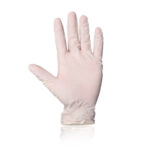
Nitrile gloves offer several advantages for demanding food-handling applications:
1. Greater resistance to fats and oils
Nitrile offers excellent resistance to oils, fats and many chemical compounds, maintaining its integrity during food handling.
2. Lower risk of migration associated with plasticizers
Unlike flexible PVC, nitrile does not require the same types of plasticizers traditionally used to make vinyl flexible.
3. Greater resistance to punctures and tears
Nitrile gloves generally offer greater durability, reducing the risk of tears during use.
4. Better operational performance
Their anatomical fit and resistance allow safer, more comfortable handling of food products, particularly in intensive processes.
The recommendation for the food industry
Although vinyl gloves can be suitable for certain food-contact tasks, nitrile gloves offer a stronger, more reliable alternative when handling fatty or oily foods or working in processes that demand greater chemical and mechanical resistance.
Choosing the right glove contributes not only to food protection, but also to operational efficiency, food safety and compliance with good manufacturing practices.
Conclusion
The FDA does not specifically prohibit vinyl gloves for fatty foods. However, regulations for food-contact materials require any migration of substances into food to remain within safe levels. Because oils can promote the migration of certain compounds found in some plastics, many food-industry businesses have moved toward nitrile solutions for operations involving fats and oils.
When it comes to food safety, choosing the right material is always an investment in safety.
Sources consulted
- FDA – Phthalates in Food Packaging and Food Contact Applications
- FDA – Food Packaging & Other Substances that Come in Contact with Food
- FDA – Understanding How the FDA Regulates Substances that Come into Contact with Food
- FDA – Guidance for Industry: Preparation of Premarket Submissions for Food Contact Substances (Chemistry Recommendations)
- Electronic Code of Federal Regulations – Plasticizers (21 CFR 181.27)
Photo: Magnific IA